Heritage Collection · Leh, Ladakh
Architectural Woodwork
Custom carved doors, Rabsal bay balconies, and lattice screens for luxury homes, hotels, and monasteries. Bring authentic Himalayan architecture to your space.
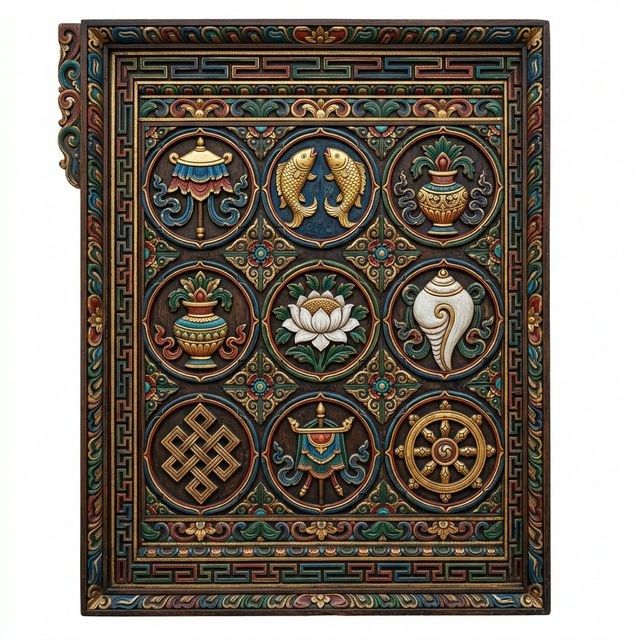
The Legacy of Himalayan Architectural Woodcraft
High in the trans-Himalayan desert of Ladakh, wood is a precious commodity, revered and treated with immense respect. For centuries, the structural identity of this stark, breathtaking region has been defined by the heavy, ornate woodwork adorning its monasteries, palaces, and noble homes. At Ladakh Wood Works, we are the custodians of this monumental craft, translating ancient blueprints into living, breathing architectural marvels that stand the test of time.
Our master carvers do not merely decorate wood; they engineer it. Traditional Ladakhi architecture relies on robust timber frameworks, intricately carved pillars (ka), majestic capitals (zhu), and sweeping wooden lintels, to support heavy earthen roofs against the region’s seismic activity and harsh winters. Today, we bring this resilient and breathtakingly beautiful architectural language to luxury homes, heritage hotels, and modern spaces seeking the authentic soul of the Himalayas. Every chiselled beam tells a story of survival, devotion, and an unbroken lineage of master craftsmanship.
Key Elements of Ladakhi Woodwork
The vocabulary of Ladakhi architectural woodwork is vast, deeply functional, and steeped in Buddhist cosmology. When we commission a project, we offer a range of traditional structural and decorative elements that can be integrated into your architectural vision.
Rabsal (Carved Bay Windows & Lattice Screens)
The iconic Ladakhi window frame, characterized by deep-set, layered wooden lintels and intricate lattice work. These windows are engineered to trap heat while filtering harsh sunlight, serving as both a thermal barrier and a canvas for elaborate carving.
Ka & Zhu (Pillars & Capitals)
The structural core of any Ladakhi grand room. The heavy wooden pillars (Ka) taper slightly and are crowned by elaborately carved, flaring brackets (Zhu) that distribute roof weight. These are often carved with mythical snow lions or floral motifs.
Traditional Doorways
Heavy, imposing double doors framed by multiple tiers of carved architraves. These entryways are designed to signify passage from the mundane world into a sacred or protected space, often featuring protective deities or the eight auspicious symbols.
Symbolism in the Timber: Carving the Cosmos
Ladakhi architectural carving is never purely decorative; it is deeply iconographic. A wooden beam in a Ladakhi home is a talisman, a silent prayer etched into cellulose. Our artisans are trained not just in carpentry, but in the strict proportions of Buddhist iconography (Thigse), ensuring that every symbol radiates its intended spiritual energy.
Common motifs include the Endless Knot, representing the interconnectedness of all life and the infinite wisdom of the Buddha. The Lotus flower frequently adorns lintels, symbolizing purity rising from the mud of existence. Fearsome but protective mythical creatures (such as the Snow Lion (representing fearless joy and the earth element) or the Garuda (representing the sky and protection from illness) are often carved into capitals and structural nodes to guard the building and its inhabitants. When you commission architectural woodwork from us, you are embedding these ancient blessings into the very bones of your building.
The Master Carver’s Process
True Himalayan woodwork cannot be rushed. The process begins with the careful selection of timber. In the arid climate of Ladakh, wood must be seasoned naturally over years to prevent warping and splitting. We primarily use seasoned high-altitude Willow (Malchang), local Poplar (Yulpa), and dense Sham Valley Walnut (Akhrot) for their durability and excellent carving properties.
Once the timber is prepped, our master carvers sketch the motifs directly onto the wood surface using traditional soot and handmade rulers. Then begins the rhythmic, meditative work of the chisel and mallet. Our artisans use dozens of specialized gouges, many forged by local blacksmiths, to achieve varying depths of relief carving. Unlike machine-milled woodwork, our hand-carved pieces possess a tactile warmth and slight asymmetry that reveals the human hand, a hallmark of sacred Thigse proportions and authentic artisanal integrity.
Joinery is another crucial aspect of our work. True to heritage techniques, we avoid modern screws and nails wherever possible. Instead, we rely on complex, interlocking mortise and tenon joints, dovetails, and wooden pegs. This traditional joinery allows the massive wooden structures to flex slightly during temperature fluctuations or seismic tremors, a resilience that modern rigid fasteners cannot match.
Preservation and Modern Integration
At Ladakh Wood Works, we believe that preserving heritage does not mean freezing it in the past. We actively collaborate with contemporary architects, interior designers, and homeowners to integrate traditional Ladakhi woodwork into modern aesthetics. Whether it is a minimalist luxury resort seeking a statement carved pillar, or an urban apartment incorporating a Rabsal lattice screen as a room divider, we adapt our scale and finish to suit your context.
Depending on your preference, the final pieces can be left in their natural state, finished with natural linseed oils to highlight the wood grain, or vibrantly painted using traditional mineral pigments in the classic Ladakhi polychrome style. Every piece is an heirloom, designed to age gracefully and accumulate character over generations.
Structural Integrity
Built for real load-bearing architectural use, utilizing centuries-old techniques for maximum strength and resilience.
Bespoke Design
Fully customized and scaled to fit your exact blueprints, whether for a boutique hotel or a private sanctuary.
Heritage Joinery
Traditional dovetail, mortise, and tenon techniques ensuring longevity and authentic historical accuracy.
Frequently Asked Questions
Can you ship large architectural pieces internationally? +
Yes, we safely crate and ship our architectural woodwork globally. We coordinate with reliable logistics partners to ensure large pillars, beams, and doorframes reach your construction site securely.
Do you work directly with architects and interior designers? +
Absolutely. We frequently collaborate with design professionals. You can share your blueprints and CAD drawings with us, and we will integrate our traditional carving and joinery specifications to meet your project's technical requirements.
What kind of wood do you use for exterior doors and windows? +
For structural frames and exterior architectural elements, we use seasoned high-altitude Poplar (Yulpa) and Malchang Willow treated with natural mineral and walnut oils for resistance to weather variations. For interior friezes and fine detailing, we use dense Sham Valley Walnut.
How long does a custom architectural commission take? +
Lead times vary significantly based on scale. A single intricately carved Rabsal bay window may take 4-6 weeks, while a complete set of pillars and beams for a large room might take 3-6 months. We provide a detailed timeline during the blueprinting phase.
Read our monograph on the history of royal carpentry at Leh Palace.