Heritage Collection · Leh, Ladakh
Wooden Dragons
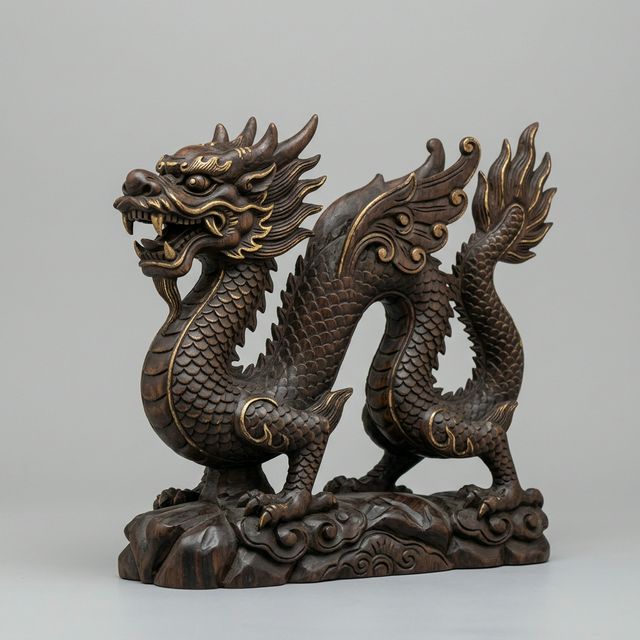
The Himalayan guardian dragon (Brug) is the most revered motif in Ladakhi woodcarving. We carve tabletop dragons, wall-mounted dragons, and architectural pillar dragons to bless and protect your spaces with timeless energy.
HONEST WORKSHOP ESTIMATES
Himalayan Dragon Benchmark Pricing
Direct artisan compensation without showroom markups. Hand-carved in Leh.
Guardian Dragon (12" x 8")
Single panel in Malchang willow. Features flaming pearl and cloud relief.
Wall Relief Plaque (24" x 16")
Deep 3D spatial relief with full body undercut and natural walnut oil finish.
Twin Pillar Dragons (Pair)
Mirrored protective dragon pair for doorway headers, monastery pillars, or altar shrines.
About the Craft
In Tibetan and Ladakhi mythology, the Dragon represents enlightenment, power, and protection. Our master artisans carve these dragons in deep relief, continuing a centuries-old tradition.
Deep Relief Carving
Multi-layered 3D carving technique for breathtaking depth.
Natural Pigments
Finished with traditional mineral colors and organic stains.
Protective Symbol
Brings auspicious, guarding energy to your home or office.
History of the Craft
The tradition of carving the mystical Dragon, or 'Brug', is deeply rooted in the artistic and spiritual heritage of the Himalayas. For centuries, these majestic creatures have adorned the wooden pillars, corbels, and lintels of ancient monasteries, palaces, and noble homes across Ladakh and Tibet. Originally serving as both architectural supports and spiritual guardians, wooden dragons were believed to ward off malevolent spirits and attract cosmic blessings. The craft was patronized by kings and high lamas, ensuring that only the most skilled artisans, the Shingzo-pa, were entrusted with bringing these celestial beings to life in wood.
Over time, the dragon motif transcended purely architectural applications, finding its way onto smaller, more personal artifacts such as altars, chests, and stand-alone sculptures. Today, the craft remains a rigorous discipline. Carvers undergo years of apprenticeship to master the intricate proportions and dynamic postures required to depict the dragon authentically. Each curve of the tail, each scale, and each fiercely compassionate expression carries historical weight, preserving a visual language that has communicated awe and reverence across the roof of the world for generations.
Materials Used
The vitality of a carved dragon is inherently tied to the wood from which it emerges. We primarily utilize sustainably sourced high-altitude Malchang Willow (Salix) and Sham Valley Walnut (Akhrot). Malchang Willow is favored for its lightweight fiber structure and resilience against splitting during deep 3D undercutting, while Walnut provides the dense, tight grain necessary for razor-sharp chiseling in the dragon's horns, whiskers, and scales. All timber is naturally air-seasoned in our Leh workshop for 2 to 3 years to ensure permanent structural stability in both mountain and lowland climates.
The finishing process is equally vital. While some pieces are left in their natural state and simply polished with organic waxes to highlight the wood's inherent grain, others are treated with traditional polychrome techniques. This involves applying natural mineral pigments bound with animal glue, a method used in Himalayan thangka painting and temple decoration. These pigments yield vibrant, earthy colors that do not fade over time. The application of gold leaf to specific areas, such as the dragon's scales or the flaming jewel it grasps, is a finishing touch that elevates the piece to a sacred object.
Symbolism & Iconography
In the spiritual lineage of Himalayan Buddhism, the Dragon is not a monster to be slain, but a benevolent, enlightened creature of immense power. It is the vehicle of Vairocana, the central Buddha of the Five Wisdom Tathagatas. The thunderous roar of the dragon is said to awaken people from the slumber of ignorance, making it a potent symbol of the Dharma, the Buddha's teachings. When placed in a home, the dragon acts as a fierce protector, guarding the threshold against negative energies and obstacles.
Iconographically, the Ladakhi dragon is depicted with distinct features: a serpentine body adorned with scales, sharp horns, a prominent snout, and a mane of fire. It is almost always shown clutching the 'Cintamani' or flaming wish-fulfilling jewel in its claws, symbolizing spiritual wealth, wisdom, and the fulfillment of altruistic desires. The dragons are often carved amidst swirling clouds or turbulent waters, representing their dominion over the elements of sky and water, and their role as bringers of life-giving rain. Owning a carved wooden dragon is an embrace of this profound symbolism, bringing a continuous source of inspiration and protection into your daily life.
The Carving Process
Carving a dragon is considered one of the most challenging tests of a Shingzo-pa master carver's skill. The process begins with 'Thig-tse', the traditional system of sacred geometry and proportion. The artisan draws a precise grid on the prepared wood block, mapping out the complex serpentine curves and the exact placement of the head, limbs, and jewels. This ensures that the final piece adheres to centuries-old iconographic standards. Once the design is transferred, the arduous work of roughing out the shape begins using large mallets and gouges.
What sets a masterful dragon carving apart is the depth of the relief and the sense of movement. The artisan must carefully carve away the negative space, often undercutting significantly so the dragon appears to writhe and leap out from the wood. This requires dozens of specialized, hand-sharpened chisels to reach into tight corners and carve delicate details like individual scales, the fierce teeth, and the wispy tendrils of the flaming jewel. The final stages involve meticulous sanding and the application of natural finishes, a process that can take weeks for a single piece. The result is a dynamic, living artwork that commands presence in any room.
Frequently Asked Questions
What does the Dragon symbolize in Ladakhi culture? +
The Dragon (Brug) is a symbol of enlightenment, immense power, and protection. It is considered a benevolent creature whose roar awakens individuals from ignorance and whose presence wards off negative energies.
Can I order a custom-sized wooden dragon? +
Yes, we accept commissions for custom sizes, ranging from small tabletop pieces to large architectural installations like wall panels or pillars. You can discuss your specific requirements directly with Stanzin.
Are the colors used on the carved dragons natural? +
For our polychrome pieces, we primarily use traditional mineral pigments and natural dyes that have been used in Himalayan art for centuries. We also offer unpainted pieces finished with natural oils to showcase the raw beauty of the wood.
How long does it take to carve a wooden dragon? +
The timeframe varies significantly based on the size and complexity of the piece. A small tabletop dragon may take a few weeks, while a large, deeply undercut architectural panel can take several months of continuous work.
Read our monograph on the iconography of Himalayan protective dragons.