Heritage Collection · Leh, Ladakh
Bowls & Lucky Symbols
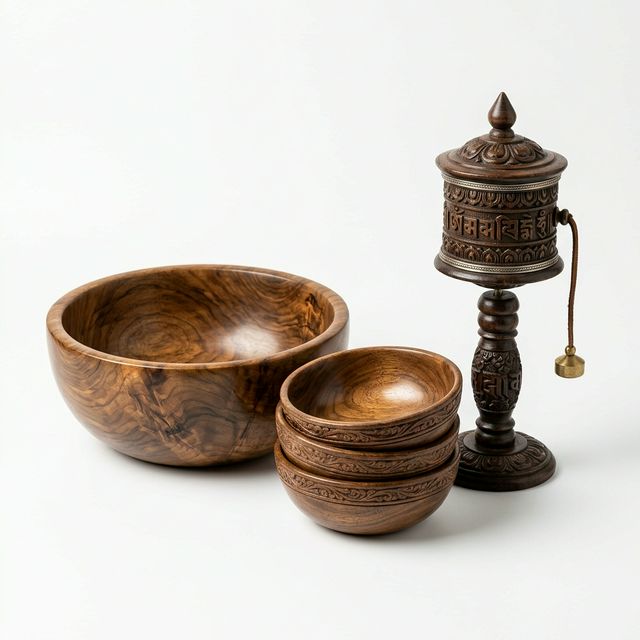
Hand-turned offering bowls and Yonchap sets featuring the Endless Knot, Lotus, and Wheel of Dharma. Painstakingly crafted from seasoned high-altitude timber, these artifacts are designed for traditional altar offerings and profound spiritual practices.
HONEST WORKSHOP ESTIMATES
Ritual Vessel Benchmark Pricing
Handcrafted in Leh from local orchard wood. Direct artisan purchase.
Hand-Turned Apricot Bowl
Turned from seasoned Sham Valley Apricot wood (Chuli) with hand-carved lotus base.
7-Piece Yonchap Water Offering Set
Seven matched offering bowls, each engraved with a distinct Tashi Tagye symbol.
Solid Walnut Carved Master Set
Heavy Sham Valley Walnut with deep 3D relief rims and traditional mineral wax coating.
Read our monograph on the sacred geometry of the Tashi Tagye.
About the Craft
The Eight Auspicious Symbols (Ashtamangala) are sacred Buddhist motifs deeply embedded in the spiritual fabric of the Himalayas. We meticulously carve these into offering bowls and wall panels, preserving their profound spiritual meaning and continuing a lineage of craftsmanship that spans centuries.
Sacred Motifs
Eight Auspicious Symbols strictly followed according to traditional Tibetan iconography.
Seasoned Wood
Carved from aged high-altitude timber to ensure longevity and prevent warping.
Ritual Ready
Perfectly proportioned for daily Yonchap offerings on personal and monastic altars.
History of the Craft
The tradition of crafting wooden offering bowls in the Himalayas dates back hundreds of years, originating from the profound need to perform daily rituals and offerings in monasteries and domestic altars. In Ladakh, where the terrain is harsh and resources have historically been scarce, the art of wood carving became a highly revered and specialized skill. The creation of these artifacts was not merely a mechanical task but a deeply spiritual practice.
Each bowl, known as a phorpa or offering vessel, was traditionally hand-turned by master artisans who had spent decades honing their craft. The intricate carvings adorning these vessels were designed to invoke blessings, prosperity, and spiritual awakening. Today, at Ladakh Wood Works, we continue this sacred lineage, ensuring that every piece we create is infused with the same devotion, precision, and historical authenticity that characterized the work of our ancestors.
The Eight Auspicious Symbols, or Ashtamangala, which frequently decorate these bowls, were originally Indian symbols of royalty that were later adopted into Buddhism. These motifs represent the offerings made by the gods to the Buddha after his enlightenment. By integrating these symbols into our woodwork, we are actively preserving a visual language that has communicated profound philosophical truths across the Himalayan region for generations. These objects, initially reserved for the most sacred spaces, now carry their protective and auspicious energies to homes around the world.
Symbolism & Iconography: The Sacred Tashi Tagye
The soul of our carved bowls lies in the sacred iconography they bear. Known natively in Tibetan Buddhist tradition as the Tashi Tagye (བཀྲ་ཤིས་རྟགས་བརྒྱད), or the Eight Auspicious Symbols (Ashtamangala in Sanskrit), each motif represents an offering made by the cosmos to Shakyamuni Buddha upon his enlightenment:
- Palbheu (དཔལ་བེའུ · Endless Knot / Srivatsa): The interweaving of spiritual wisdom and boundless compassion, representing the unity of all phenomena.
- Pema (པདྨ · Lotus / Padma): Immaculate purity of body, speech, and mind blossoming untainted above the waters of attachment.
- Khorlo (འཁོར་ལོ · Wheel of Dharma / Dharmachakra): The continuous turning of enlightened teachings guiding beings toward liberation.
- Dungkar (དུང་དཀར · White Conch): The deep, resonant sound of truth awakening minds from the slumber of ignorance.
- Bumpa (བུམ་པ · Treasure Vase): Inexhaustible spiritual wealth, health, and cosmic prosperity.
- Sernya (གསེར་ཉ · Golden Fishes): Liberation and spiritual joy swimming fearless through the ocean of worldly existence.
- Gyaltsen (རྒྱལ་མཚན · Victory Banner): The absolute triumph of wisdom over negative obstacles, disharmony, and ego.
- Dug (གདུགས · Sacred Parasol): Compassionate protection sheltering all living beings from scorching suffering and harmful influences.
Our Shingzo-pa master carvers approach each symbol as a sacred meditation, strictly adhering to centuries-old monastic iconometry (Thigse). Incorporating these eight blessings in a seven-piece Yonchap water offering set brings immense harmony and merit to any domestic altar or living sanctuary.
Materials Used
The altitude and arid climate of Ladakh present unique challenges and opportunities for woodwork. We source our timber responsibly, utilizing locally available woods such as Himalayan Walnut (Akhrot), Apricot wood (Chuli), and specifically seasoned Willow. Walnut, known for its rich, dark grain and durability, is highly prized for premium offering bowls. Its density allows for incredibly intricate carving that holds its edge over centuries.
The wood undergoes a rigorous, natural seasoning process. It is air-dried in the high-altitude Ladakhi environment, a process that can take several years. This slow drying ensures that the moisture content is perfectly balanced with the ambient environment, completely preventing the warping, cracking, or splitting that often plagues mass-produced wooden items when exposed to central heating or differing climates.
For finishing, we eschew synthetic lacquers in favor of natural oils and waxes. These traditional finishes penetrate deep into the wood grain, nourishing the timber while providing a subtle, tactile sheen that enhances the natural beauty of the material. This organic approach ensures that the bowls remain ritually pure and safe for holding water, grain, or other offerings, making them fully compliant with monastic standards of ritual purity.
The Carving Process
The journey from a raw block of seasoned wood to a finished, sacred offering bowl is a labor of intense focus and skill. The process begins with turning the wood on a lathe to establish the perfect, symmetrical profile. The proportions of a Yonchap bowl are specific; they must be identical in size to form a harmonious set of seven across the altar.
Once the primary shape is turned, the piece is handed over to the master carver. Using a collection of finely honed chisels (some no wider than a few millimeters), the artisan begins to liberate the design from the wood. This is done entirely by hand, without the aid of CNC routers or modern rotary tools. The carver relies on muscle memory, a sharp eye, and an intuitive understanding of the wood's grain to execute the complex, overlapping lines of the Endless Knot or the delicate petals of the Lotus.
The final stage involves meticulous sanding and finishing. The interior of the bowl is smoothed until it feels like glass, while the exterior carvings are carefully burnished to enhance their three-dimensional depth. The result is an artifact that is not only visually stunning but also spiritually resonant, a testament to the enduring legacy of Ladakhi woodcraft and a true centerpiece for spiritual reflection.
Cultural Significance & Modern Value
In modern times, the significance of these hand-carved bowls extends far beyond their traditional use in Himalayan monasteries. They represent a tangible connection to a rapidly vanishing way of life, where time was measured not in minutes, but in the slow, deliberate strikes of a chisel. Holding one of these bowls is holding a piece of Ladakh’s soul.
For practitioners around the world, integrating a genuine, hand-crafted Yonchap set into their practice brings a profound sense of grounding and authenticity. The very energy of the high-altitude mountains, the resilience of the timber, and the devotion of the carvers are embedded within each piece, elevating the daily act of offering into a deeper communion with the divine.
By supporting this traditional craft, patrons help ensure that the master artisans of Leh can pass down their invaluable knowledge to the next generation. These bowls are not merely commodities; they are cultural ambassadors, bridging the ancient wisdom of the Himalayas with the modern world's search for meaning and mindfulness.
Frequently Asked Questions
What is a Yonchap set? +
A Yonchap set typically consists of seven identical offering bowls used in Tibetan Buddhist water offering rituals. They symbolize the offerings of water for drinking, water for washing, flowers, incense, light, perfume, and food, presented to enlightened beings.
Can I request a custom combination of symbols? +
Yes. While the Eight Auspicious Symbols are standard, we can customize your bowls or wall panels to feature specific symbols that resonate with your personal practice, such as the Vajra (Dorje), the Bell (Ghanta), or specific mantras in Tibetan script.
How should I care for my wooden bowls? +
To maintain the beauty and integrity of the wood, we recommend wiping them dry after each use if used for water offerings. Periodically, you can nourish the wood by rubbing a small amount of food-safe mineral oil or natural beeswax into the surface. Avoid exposing them to direct, intense heat or prolonged sunlight.
Do you ship these artifacts internationally? +
Yes, we safely package and ship our hand-carved artifacts globally directly from our workshop in Leh, Ladakh. Shipping times and costs vary depending on the destination and the intricacy of the ordered set.